
How to Choose Cabinet Door Styles for Your Kitchen
Start With the Doors
Your cabinet doors set the tone for the whole kitchen. They cover more wall space than almost anything else in the room, so the door style you pick does more to define the look than your countertops, backsplash or hardware.
The good news is that most door styles fall into a handful of families. Once you know what each one looks like and which homes it suits, choosing cabinets gets a lot easier. Below we break down the most popular door styles, then show how they pair with common home styles like craftsman, traditional, Tudor, French country, rustic and contemporary.
First, How the Door Sits on the Cabinet
Before picking a door style, it helps to know there are two separate choices: what the door looks like, and how it sits on the cabinet box. A shaker door, for example, can be full overlay or inset, and the two look noticeably different.
- Full overlay. The door covers almost the entire front of the cabinet box, with very little frame showing. This is the most common look today and feels clean and modern.
- Partial overlay. The door covers part of the frame, leaving a visible strip of frame around each door. You’ll see this in a lot of older and builder-grade kitchens. It’s usually the most budget-friendly.
- Inset. The door sits inside the cabinet frame, flush with the front. It’s a classic, furniture-like look that takes precise craftsmanship, which also makes it one of the more expensive options.
Popular Cabinet Door Styles
Shaker
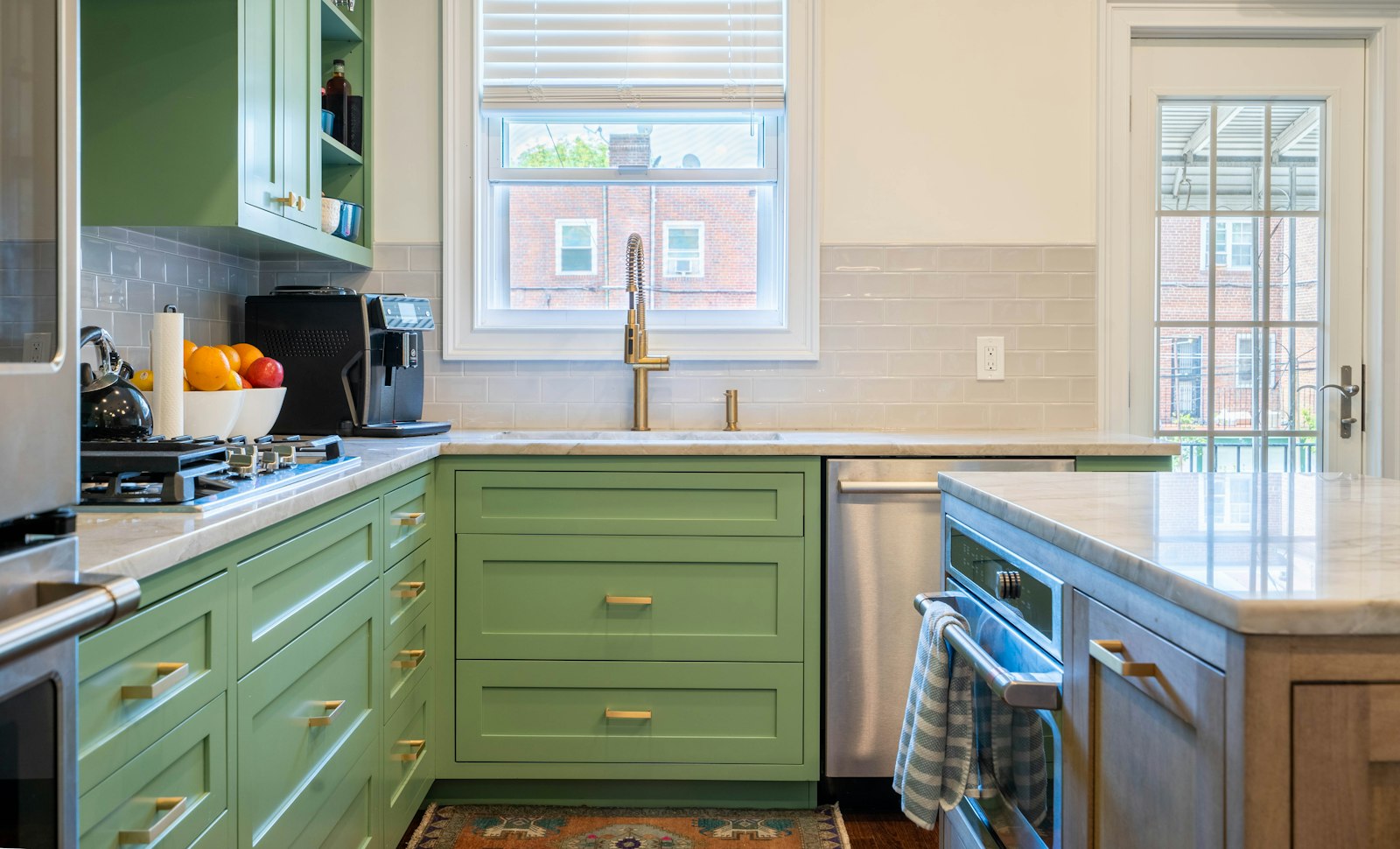
Shaker is the most popular door style in American kitchens, and for good reason. It’s a five-piece door: a flat center panel surrounded by a simple square frame. No curves, no decoration. It works in almost any kitchen, takes paint and stain equally well, and doesn’t feel dated. If you’re torn, shaker is the safe bet.
Slim shaker
Slim shaker keeps the shaker shape but uses a much narrower frame around the panel. The result looks lighter and more modern, a nice middle ground between classic shaker and a flat slab. It’s become a favorite for transitional and modern kitchens. One thing to know: the narrow frame leaves less room for knobs and pulls, so hardware placement takes a little more thought.
Inset
Inset isn’t a door shape so much as a way of mounting the door. Inset cabinets are most often paired with shaker or beaded doors. The tight, even gaps around each door give a custom, heirloom feel. It’s beautiful, but it costs more, and the doors may need occasional adjustment as wood shifts with Wisconsin’s humidity swings between summer and winter.
Raised panel
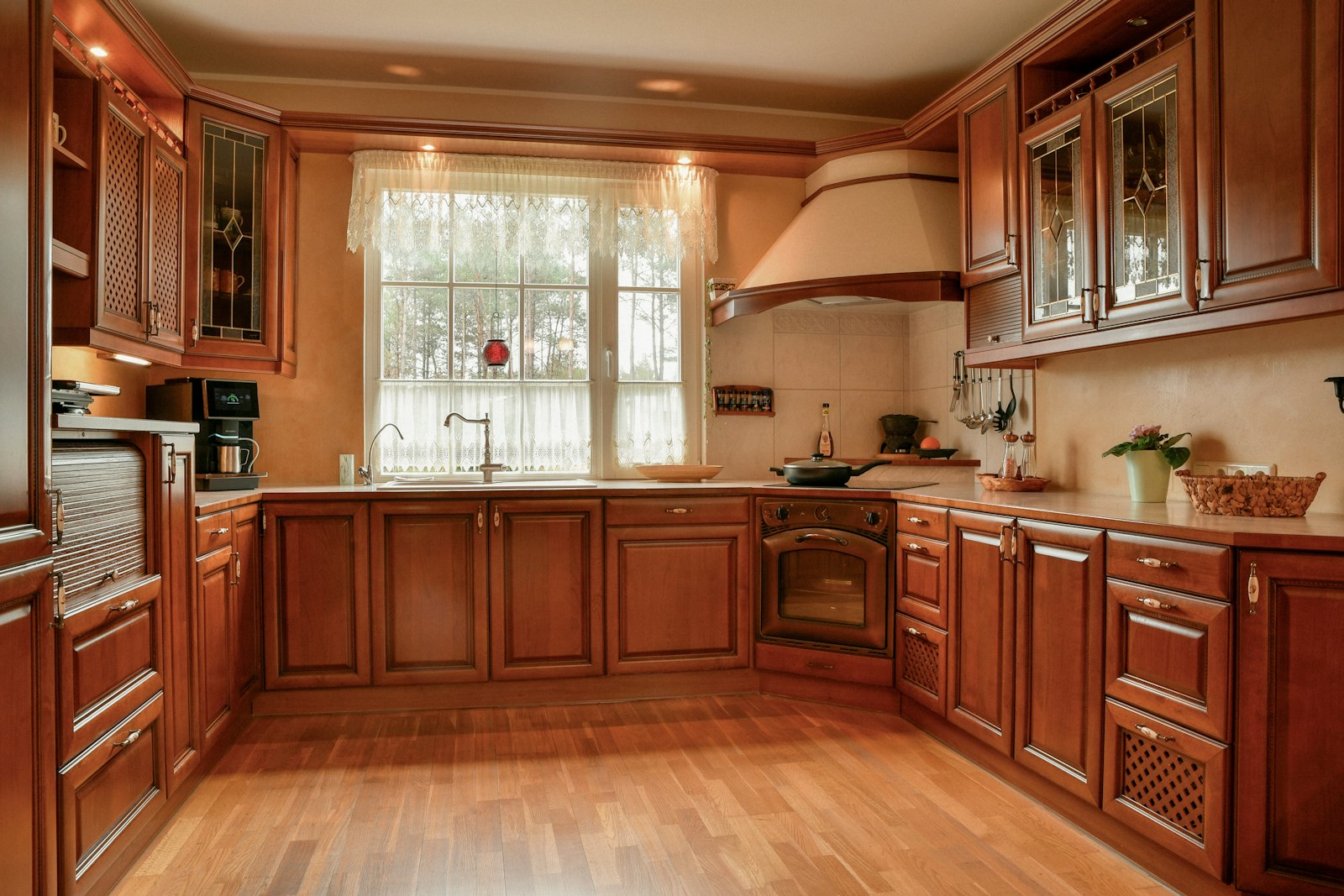
Raised panel doors have a center panel that’s shaped and raised toward you, with profiled edges where it meets the frame. This is the classic formal look found in many traditional kitchens. Variations include square raised panel and cathedral (arched) raised panel. The detailing adds depth but also more spots for dust and grease to collect.
Beaded
Beaded doors add a small rounded bead detail, usually along the inside edge of the frame. Beaded inset is especially common in farmhouse kitchens and older-home restorations. It adds a bit of character without going fully ornate.
Slab (flat panel)
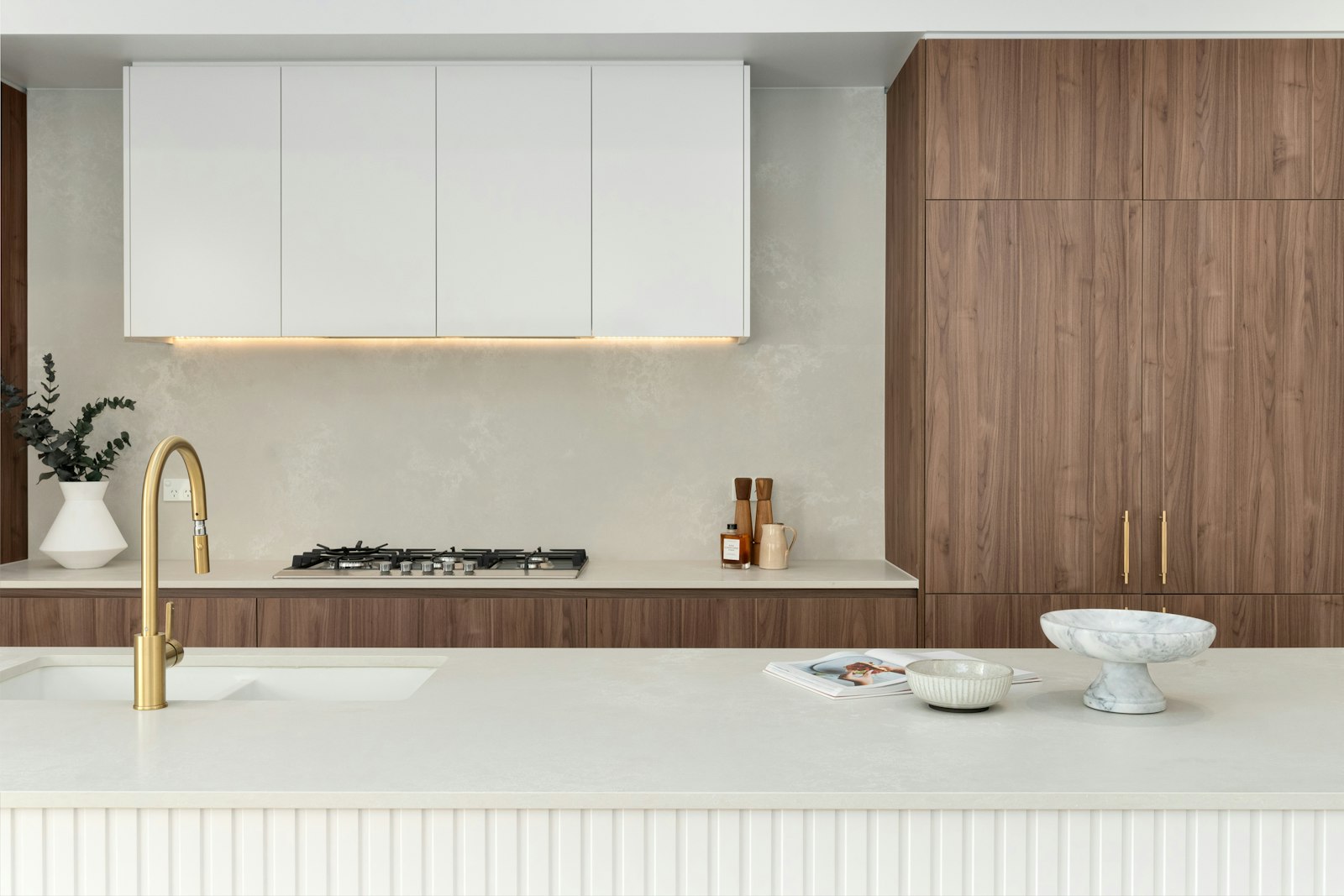
Slab doors are one solid, flat piece with no frame or panel. They’re the go-to for modern and contemporary kitchens, and they show off materials well, whether that’s a wood grain, high-gloss lacquer or a matte laminate. They’re also the easiest to wipe clean.
Other Popular Styles Worth Knowing
- Recessed panel. The broader family that shaker belongs to: a frame with a flat, recessed center. Some versions add a small profile or edge detail for a slightly dressier look.
- Beadboard. The center panel has vertical grooves, like beadboard wainscoting. Common in farmhouse, cottage and coastal kitchens.
- Glass front. A frame holding glass instead of a wood panel. Great for upper cabinets where you want to display dishes. Clear, seeded, frosted and mullion (divided) glass all give different looks.
- Mitered. The frame corners are joined at an angle like a picture frame instead of square. It reads a little more traditional or rustic.
- Fluted or V-groove. Slab or panel doors with vertical grooves cut in. Fluted fronts have been trending on islands and accent cabinets for a modern, textured look.
- Louvered. Horizontal slats, more common in coastal or cottage kitchens, pantries and laundry rooms.
Matching Cabinet Doors to Your Home’s Style
A kitchen looks most “right” when it fits the house around it. You don’t have to match perfectly, but it helps to start from your home’s architecture and adjust from there.
Contemporary
Contemporary kitchens are about clean lines and minimal detail. Slab doors are the natural fit, often in matte paint, high-gloss or a bold wood grain. Slim shaker works well if you want a little softness. Keep hardware simple, or skip it with integrated pulls or push-to-open doors.
Craftsman
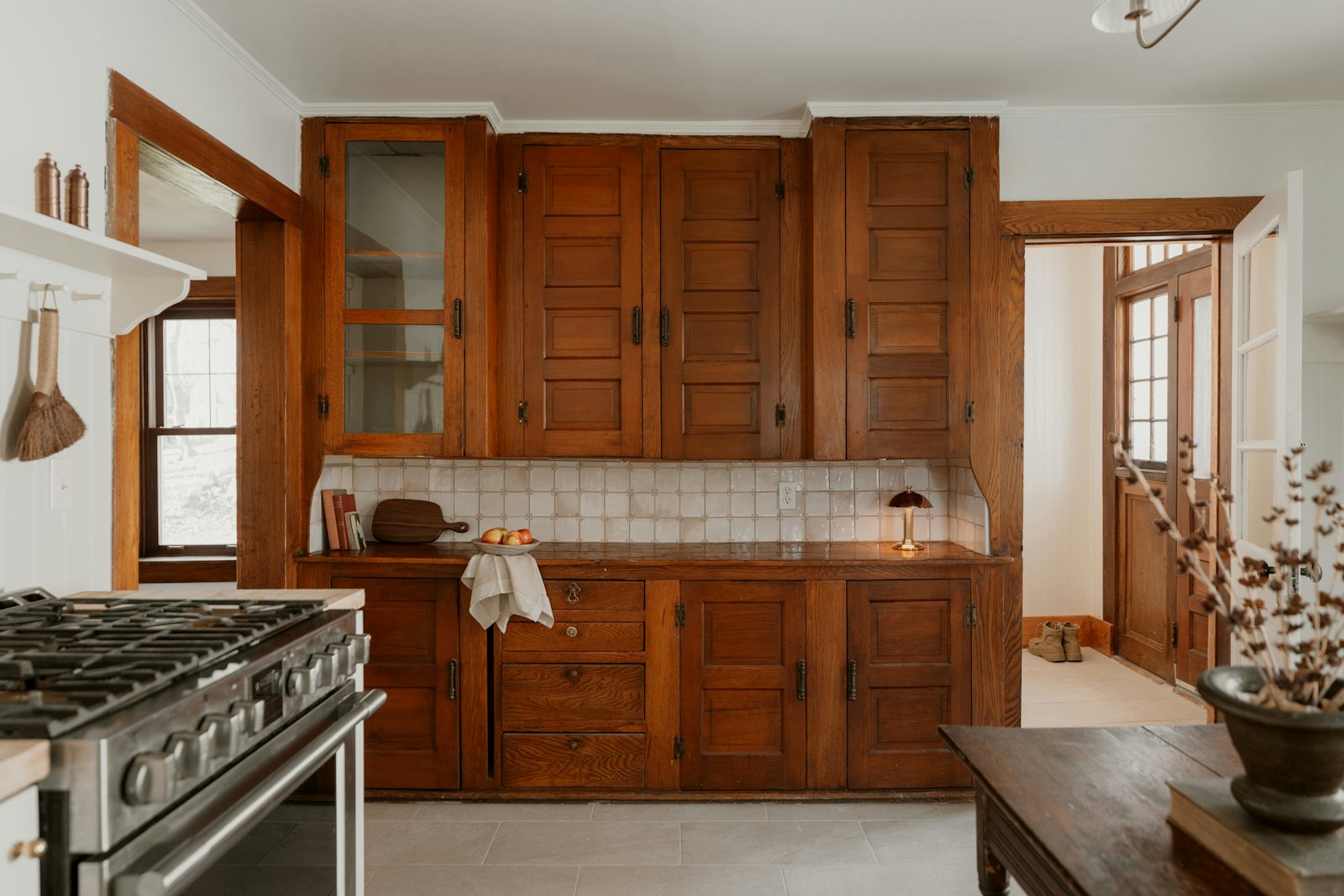
Craftsman homes celebrate honest materials and solid woodwork. Shaker doors, especially in quarter-sawn oak or cherry with a warm stain, are a classic match. Inset construction fits the era well. Pair with oil-rubbed bronze or aged brass hardware, and consider a few glass-front uppers with simple mullions.
Traditional
Traditional kitchens lean into detail and symmetry. Raised panel doors are the classic choice, along with recessed panel doors with added edge profiles. Crown molding, decorative end panels and furniture-style feet on the island help complete the look. Both painted and stained finishes work.
Tudor
Tudor homes have dark timber, arched doorways and an old-world feel. Doors with arched or cathedral raised panels echo the architecture. Rich, darker stains on oak or walnut feel at home here, as do iron or dark bronze hardware. If full Tudor feels too heavy, a stained shaker or beaded inset door with traditional moldings gives a nod to the style without overwhelming the room.
French country
French country kitchens feel elegant but lived-in. Look for raised panel or beaded doors with soft curves, often in painted cream, soft white or muted blue-gray, sometimes with a light glaze or distressing. Glass-front uppers with mullions, open shelving and decorative hardware like bin pulls and porcelain knobs fit right in.
Rustic
Rustic kitchens highlight natural materials and texture. Shaker, mitered or simple recessed panel doors work well in knotty alder, hickory, reclaimed wood or a heavy wire-brushed finish. Avoid anything too glossy. Black iron or hammered hardware completes the look.
At a Glance
| Home style | Best-fit door styles | Finishes that suit it | Hardware ideas |
|---|---|---|---|
| Contemporary | Slab, slim shaker, fluted | Matte or high-gloss paint, bold wood grain | Slim bar pulls, integrated or push-to-open |
| Craftsman | Shaker, inset shaker | Warm stain on oak or cherry | Oil-rubbed bronze, aged brass |
| Traditional | Raised panel, recessed panel with profile | Painted or rich stain | Polished nickel, brass, decorative knobs |
| Tudor | Cathedral or arched raised panel, stained shaker | Dark stain on oak or walnut | Iron, dark bronze |
| French country | Raised panel, beaded, glass front | Soft painted colors, light glaze or distressing | Bin pulls, porcelain knobs |
| Rustic | Shaker, mitered, recessed panel | Knotty alder, hickory, wire-brushed or reclaimed | Black iron, hammered metal |
Practical Things to Weigh Before You Decide
Looks matter, but so does living with the doors every day.
- Cleaning. Slab doors wipe clean in one pass. Shaker has a few inside corners. Raised panel, beaded and beadboard doors have more grooves where grease and dust collect, especially near the range.
- Paint vs. stain. Painted five-piece doors can show a hairline crack at the joints as the wood expands and contracts through the seasons. It’s normal, not a defect. Stain hides this better and shows the wood grain.
- Budget. Simpler styles like slab and shaker are generally the most affordable. Inset construction, detailed raised panels and specialty glass add cost.
- Resale. If you plan to sell in the next few years, shaker and slim shaker appeal to the widest range of buyers. Bolder choices are great if you’re staying put.
- See it in person. Door samples look different on a screen than under your own kitchen lighting. Ask to see a full-size door, not just a small finish chip, before you commit.
Ready to Start Planning?
There’s no single right answer. The best door style is one that fits your home, holds up to how you cook and clean, and still feels like you years from now. Mixing styles works too, like slab lowers with glass-front uppers, or a stained shaker island in a painted kitchen.
If you’re planning a kitchen remodel in Southeast Wisconsin, enter your information in this contact form, and we’ll get you connected with a local remodeling contractor who can walk you through door samples, finishes and layouts in person.
Keep Reading
How Long Does a Kitchen Remodel Take in Franklin, WI?
Wondering how long a kitchen remodel takes in Franklin, WI? Here’s a realistic timeline, phase by phase, plus what can slow things down and how to keep your project on schedule.
Quartz vs. Quartzite vs. Granite: Choosing the Right Kitchen Countertop
Quartz, quartzite or granite? Compare how each countertop looks, holds up and costs so you can choose the right fit for your kitchen and the way you use it.
Stock vs. Semi-Custom Cabinets: Why Semi-Custom Is Worth It
Stock or semi-custom? Here’s how the two really compare and why semi-custom cabinets give you a better fit, better quality and a kitchen that lasts.
Ready to Start Your Kitchen Remodel?
Planning a kitchen remodel in Southeast Wisconsin? Request a quote, and a trusted local remodeling company will reach out to talk about your project, your goals and what you’re looking for.